
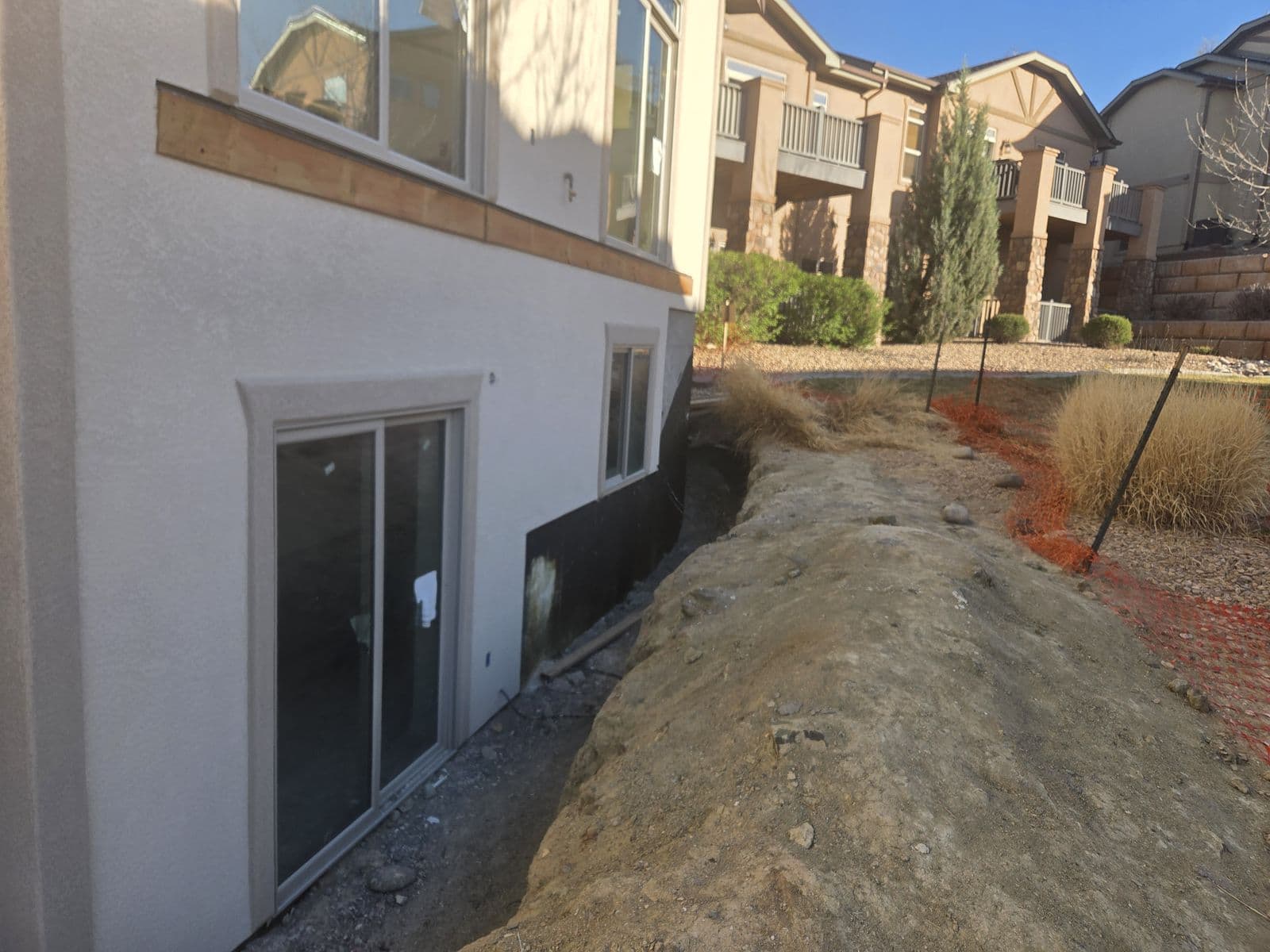
An ADU sewer connection works when wastewater can reach an approved receiving point at verified elevations, by gravity where possible or by an approved pump where it is not. Investigate that route before you lock in the floor plan, because a bathroom that looks convenient on paper may sit too low, too far from a usable connection, or beyond a damaged existing lateral. The practical question is whether the proposed route works and who is pricing each part of it.
Sewer rules are not national. Whether an ADU may share the main home's lateral, needs its own connection, or pays a connection charge depends on the local sewer authority, state law and the adopted plumbing code, so get the specific rules for your parcel from your jurisdiction and utility.
Plan the ADU sewer connection from the connection point, not the nearest cleanout
A visible cleanout is a clue, not proof that an ADU can connect there. Ask a qualified plumbing contractor to identify the existing private line, its route, condition, size and receiving elevation. Existing sewer records and a camera inspection can inform that investigation, but missing records should remain an open item.
Separate private-side work from work involving a public main or right-of-way. Seattle Public Utilities, for example, publishes a separate side-sewer permit process. Your utility and permitting authority may divide responsibilities differently. Obtain their requirements for this property rather than copying a neighboring project's detail.
Gravity versus a pump: compare the whole system
A gravity connection needs verified fall
Gravity drainage relies on a properly designed downward route. The designer needs the ADU's proposed finished-floor and pipe elevations, the receiving connection elevation, the route length and the applicable plumbing requirements. Backyard surface slope alone does not establish whether gravity drainage will work.
Do not use a generic internet slope to approve a route. Pipe sizing, depth, cover, crossings and local standards belong in the plumbing design. A slightly different building position or bathroom arrangement may improve the route without adding equipment.
A pumped connection adds operating responsibilities
If gravity is impractical, a designer may evaluate an approved pumping arrangement. Ask where the equipment goes, how it is serviced, what happens during an outage, how alarms work and who responds to a failure. Establish whether the proposed receiving system accepts that connection.
For a parent or tenant, a failure is a household problem rather than an abstract maintenance line. Include access and replacement in the decision. A pump option should have an equipment specification and service plan, not merely the words “pump if needed.”
Build a sewer scope that can be priced
Send the same route sketch and assumptions to every bidder. Request separate treatment of investigation, excavation, pipe installation, connection work, inspection, testing, backfill and surface restoration. Identify work under patios, mature landscaping, driveways or public pavement.
Use a simple responsibility table:
| Question | Evidence to request | Who confirms it |
|---|---|---|
| Where can the ADU connect? | Marked route and connection location | Plumbing designer and sewer authority |
| Can it drain by gravity? | Elevation-based route assessment | Qualified design professional |
| Is the existing line suitable? | Inspection findings and repair scope | Plumbing contractor |
| What remains uncertain? | Named allowance or excluded investigation | Builder and owner |
The table is a purchasing tool, not a substitute for calculations. Its value is making uncertainty visible before you compare prices.
An example of a decision that changes the plan
Imagine two possible ADU locations. One preserves a larger patio but requires a long trench through paving. The other shortens the connection route but shifts the entrance. Neither option is automatically cheaper. Ask the team to price both using the same restoration standard and to identify whether either needs pumping.
This comparison is more useful than asking for an average sewer cost. It connects the cost to a choice you can still change. Record which option was selected and update the site plan before final bids.
The Age-in-Place ADU Guide
Design a home around the life your parent wants to keep, build it so it holds up as needs change, and pay no more than it should cost.
What an experienced ADU builder checks on the sewer route
On the ADUs we build, the sewer line is one of the first things located on site, because it can decide where the bathroom and kitchen go. These are the checks that tend to change a plan or a price:
- Camera the existing lateral before relying on it. A line that drains the main house today may still have root intrusion, offset joints, sags or an older pipe material. If the ADU will tie into it, the condition of the shared section matters as much as the new pipe.
- Find the depth at the tie-in, not just the location. The receiving elevation sets how high the ADU floor and fixtures must be for gravity flow. A shallow tie-in point can push the floor up, add steps at the entry or force a pump.
- Walk the trench route for conflicts. Water, gas, electrical and irrigation lines, tree roots, foundations and retaining walls along the route all affect cost. Call the free utility-locate service before digging and mark private lines separately, because public locators usually do not mark them.
- Plan cleanouts and access. Ask where cleanouts will be placed so the line can be serviced later without breaking out a new patio.
- Coordinate the sewer with the other utilities. Water, power and sewer often share a corridor from the main house. Designing them together can shorten trenching and avoid digging the same yard twice.
- Ask who owns the work past the property line. Some utilities perform or require licensed contractors for work in the street; others leave it to the owner. That boundary affects schedule, permits and traffic control.
None of these checks replaces the plumbing design or the authority's review. They make sure the drawings and bids reflect the conditions actually in the ground.
Questions to resolve before signing
Ask whether the quoted connection includes any existing-lateral repairs, public work, utility charges and pavement restoration. Identify the approvals required before trenches are covered. Confirm who keeps inspection records and photographs for future maintenance.
If a key elevation is unknown, buy the investigation before buying certainty in a fixed construction price. A small, defined feasibility task can prevent a much larger redesign later; its actual cost depends on the property and provider.
Plan the next step
Use the ADU feasibility checklist to organize the other site questions. Then explore your property with ADU Insights where supported, and bring the preliminary layout to the professional who will verify the sewer design.