
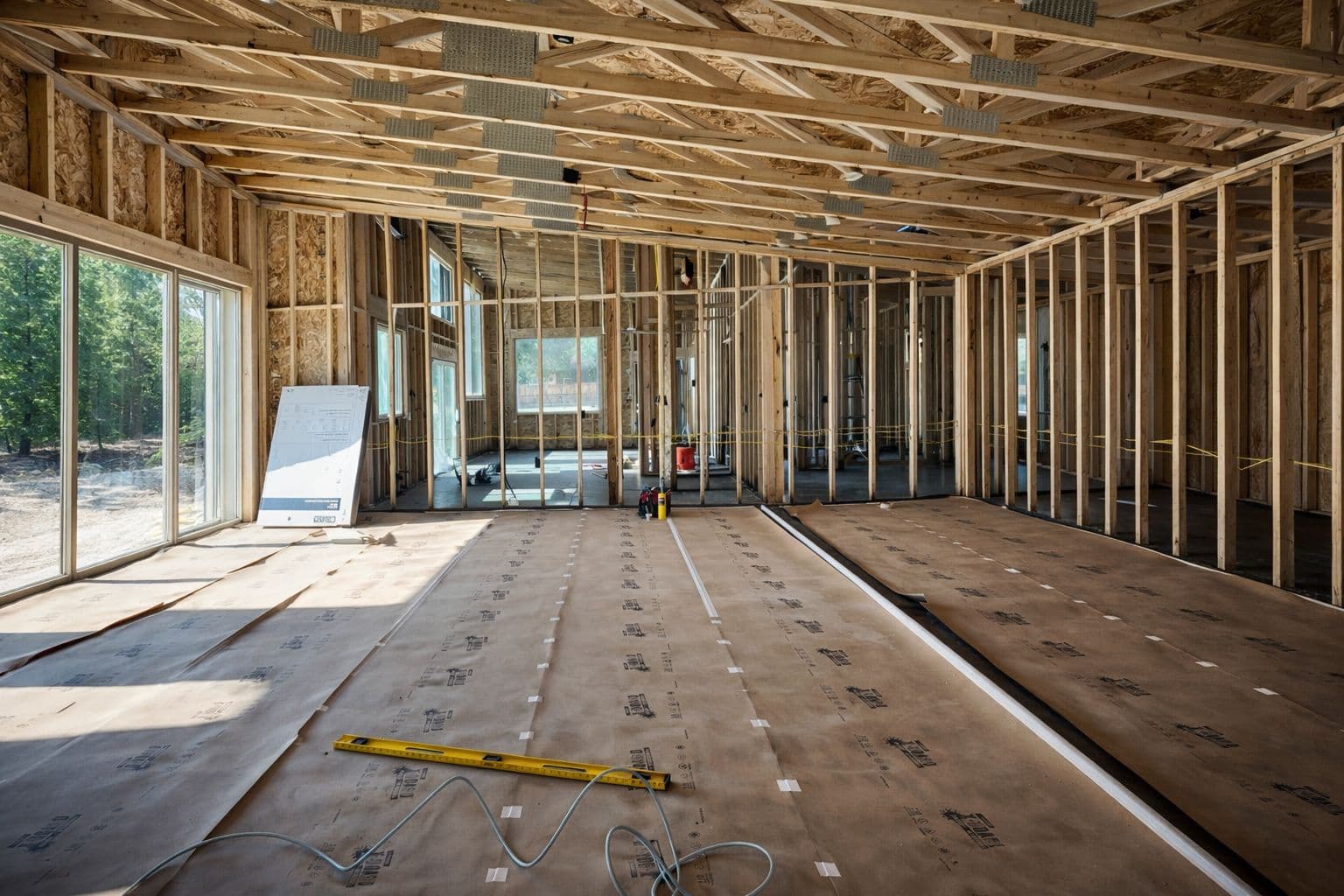
ADU construction loan draws release money in stages after the lender verifies progress, so funds rarely arrive at the exact moment each invoice is due. That timing difference, plus costs the loan may not fund at all, is what creates a mid-build cash gap. Before signing construction and financing agreements, map when you owe money and when the lender will actually release it.
The Consumer Financial Protection Bureau describes construction financing as generally short term, with funds commonly advanced as work progresses. The actual loan agreement controls your draw process, interest, repayment and any conversion to permanent financing.
Compare the build schedule with ADU construction loan draws
The builder's payment schedule identifies contractual milestones. The lender's draw schedule identifies conditions for releasing funds. Put them side by side, including owner-funded costs paid before the first draw.
Ask whether the lender reimburses completed work, funds approved materials or handles another arrangement. Identify required inspections, invoices, lien documentation and approval steps. Do not assume an invoice automatically triggers immediate payment from the lender.
Ask who submits each request
Name the person responsible for assembling a draw package and correcting missing documents. Establish how the owner can see status and what information the builder receives. A process that depends on everyone assuming someone else submitted the request is fragile.
Separate total funding from available cash
For each stage, record the payment due, owner cash available, expected lender release and any amount temporarily unfunded. Include design, permits, utility work and other costs the loan may treat differently from the building contract. Permit, impact and utility connection fees vary by jurisdiction and utility, and some are due before construction can start.
This exercise is not a prediction of lender behavior. It is a way to identify where the plan depends on a release that has not yet been approved. Ask the lender to review the sequence before construction begins.
| Stage | Question for the lender and builder |
|---|---|
| Before start | Which costs must the owner pay first? |
| During construction | What evidence releases each advance? |
| Changes | Must revised scope be approved before funding? |
| Completion | What remains unpaid until final conditions are met? |
Keep contingency funding separate from money already committed to known costs. Otherwise the same cash can appear to solve two problems at once.
Investigate factory deposits early
For a prefab or modular ADU, the supplier may require production payments before installation. Ask the lender whether and how it finances off-site work, stored materials or deposits. Get the answer for the actual supplier and contract structure.
Do not assume a site-built construction draw process accommodates a factory's payment schedule. If there is a gap, resolve the financing or contract sequence before paying a nonrefundable deposit. Have the appropriate professionals review ownership, security and delivery terms.
What an experienced ADU builder checks in a draw schedule
A builder who has worked through lender draws will usually test the schedule against how the job actually runs:
- Milestones an inspector can see. "Framing complete" or "rough-in inspection passed" can be verified on a site visit. "Materials ordered" or "50 percent complete" invites disagreement. Tie each payment to something observable.
- Front-loaded costs. Design, engineering, permit fees, utility deposits and long-lead items such as windows or electrical equipment often come due before the first advance. Identify who pays each one and when.
- Holdbacks. Ask whether the lender withholds part of each advance until completion, and make sure the construction contract's retention terms line up with it rather than doubling up or leaving a gap.
- Lien paperwork. Lenders commonly ask for lien waivers or releases with each draw. Forms and rules for mechanics' liens vary by state, so confirm which documents the lender accepts and who collects them from subcontractors and suppliers.
- Inspection timing and fees. Ask how quickly the lender's inspector can visit after a request, who schedules it and who pays any inspection or draw fee.
- Title updates. Some lenders require a title check before releasing each advance. Ask whether that adds time to every draw.
- Change approvals. A change order that the lender has not approved may not be funded, even if the owner has signed it.
On the ADUs we build, the draw schedules that work best are written with the lender's inspection checklist open on the table, so every milestone already matches what the inspector will look for.
The Investor’s ADU Guide
Underwrite the deal honestly, then build a unit tenants choose and stay in — for no more than an ordinary one costs.
Model delay and change scenarios
Test what happens if a draw is delayed, a utility connection takes longer or a documented change increases the project cost. Ask whether interest accrues on disbursed funds and how extensions or additional advances are treated under the actual loan.
Use scenarios rather than invented "typical" delays. You might ask: if the next payment becomes due before the next approved release, what cash pays it? The answer should identify a real source of available funds, not hoped-for future rent.
Compare alternative borrowing only with a qualified lender or adviser. CFPB's HELOC comparison guidance explains that home-secured options carry risks and fees. Another credit line is not automatically an appropriate solution to a weak construction cash plan.
Understand the exit before entering the loan
Ask what happens at completion: automatic conversion, a required refinance, a balloon payment or another arrangement. Identify appraisal, occupancy, income and documentation conditions. A plan dependent on refinancing should include a scenario in which the expected refinance is unavailable or smaller than anticipated.
Keep the construction cash model separate from the stabilized rental model. One measures your ability to finish the building; the other measures operations after completion.
Underwrite the whole sequence
Start with the free ADU Insights lot check to confirm the property can support the project, then use the ADU Insights investor resources to organize it and the ROI calculator for operations after completion. Bring the construction payment map to your lender before finalizing the build contract.